The Red Star Line Museum has been collecting personal stories about migration for years. Language and migration go hand in hand: people strive to preserve their native tongue, learn the language of their new future, and translate for their parents or children. The diverse experiences surrounding language are central to the exhibition.
Language is not just a tool for communication, but a vessel for memory, homesickness, and identity. After all, settling in a new place and adopting a new language shapes who we are. Both past and present, for example, people have adapted their names or the spelling of it to better fit into their new society. How far do people go to integrate? Who do you become under a new name?
The project
As part of the participatory project “Language & Migration,” the Red Star Line Museum spent two years exploring the city to investigate the role of language in migration. 2024 was dedicated to research, networking, and prospecting. In 2025, the museum launched a collaboration with the arts education organization ‘Kunst in Zicht’ and various local language communities.
Together with heritage communities and artists, the museum is exploring the several core questions:
- What is the language of migration?
- Can we find the words to express who we are and who we used to be?
- Can you put down roots in a new language?
- In which languages do people feel at home?
- Which native languages resonate across the city and are passed down to future generations?
- Do people find common ground in (new) words? If so, how?
- What emotional journey does language undergo?
- How does language reflect reality and the power dynamics surrounding migration?
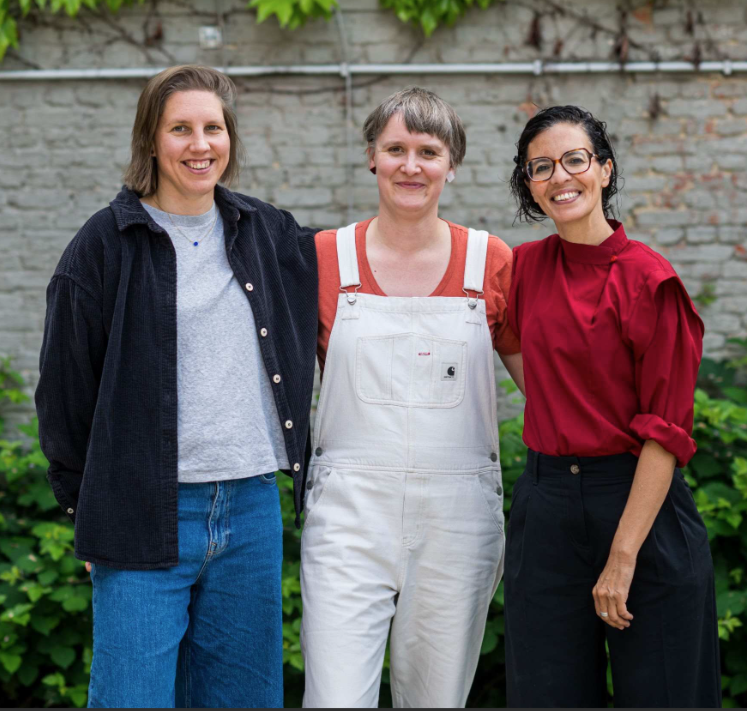
From left to right, the three project leaders:
Aniek Smit (oral history), Dorine De Vos (public engagement), Nadia Babazia (outreach & participation)
The exhibition
The exhibition is built around three elements:
- Historical and contemporary stories and objects from our collection
- Artworks that invite reflection on language and migration
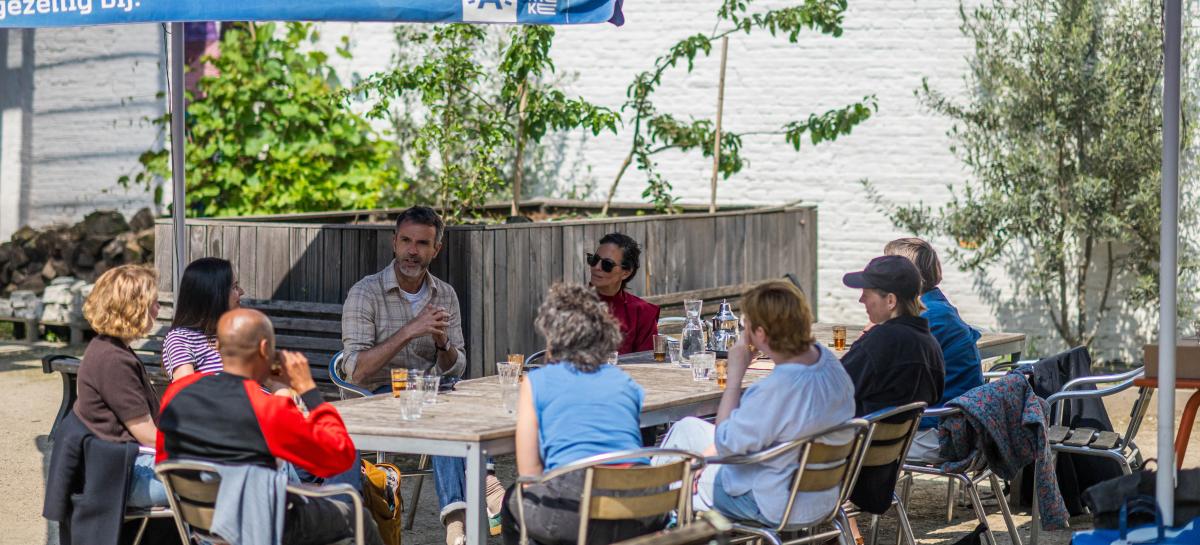
- Open conversations and interactive community projects in collaboration with Kunst in Zicht
For the community initatives, three specifiart projects were defined, in which an artist works with a group of children, youth, or adults on a specific aspect of language.
“Language Barriers Between Generations” takes its cue from Zineb Sedira’s video work ‘Mother Tongue’ (2002). A grandmother, daughter, and granddaughter speak to one another, each in her own language. While communication flows smoothly between two consecutive generations, the grandmother and granddaughter share no common language and can no longer understand each other through words. Theater maker Celia Fechas engages with schoolchildren to discuss which languages they speak at home, how they communicate with their grandparents, and what they can understand without words.
A new Antwerp pidgin language: Theater maker Ahilan Ratnamohan and artistic researcher Enrica Camporesi work with participants to explore a new pidgin language: one that stems from what people feel is missing in Dutch. Which words or expressions exist in your home language but lack a translation in Dutch? Which feelings are hard to convey? Is there even a piece of grammar or linguistic logic you miss. Based on individual conversations, a ‘language council’ of' multilingual participants will search for new words and structures, whichwill form the basis of the new Antwerp pidgin language. The museum is proud to embrace this ongoing project.
Letters of Experience: Word artist Bumba explores language through letters. Drawing inspiration from old letters and testemoniesin the museum’s archicves, she highlights how a century ago migrants were already expressing their complex relationship with languages – the tongues they spoke, missed, learned or slowly lost. She connects these historical stories with more recent testimonies. organizing workshops where non-native speakers and other groups write their own letters about their feelings towardlanguage, in all the languages they know.
The exhibition demonstrates that migration and multilingualism are normal. Everyday aspectsof life. For some visitors, these stories will feelfamiliar; for others, the exhibition offers a meaningful glimpse into unfamiliar experiences . Embracing a new language can be beautiful and enriching, but it can also be challeging and painful. Behind these individual stories lies a broader, universal narrative of identity, coexistence, and connection.