

The Red Star Line Museum is a museum full of stories. The museum has already collected hundreds of travel stories with the generous assistance of people in Belgium and abroad. Sometimes we receive extensive written stories, sometimes fragments: a photo, scribbles on an old postcard or a tattered letter. All those personal testimonies, letters and personal items provide us information about the migration period to America, the history of the shipping company and the lives of the passengers.
The collective memory
The Red Star Line Museum aims to become the collective memory of stories about past and contemporary migration. In addition to historic stories, the museum has collected a few hundred contemporary stories about migration. These stories are not directly linked to the Red Star Line, and we want more of them. We are still looking for personal stories and, if possible, accompanying photos and objects.
These stories are immaterial heritage and that is why the museum ensures they are not forgotten.
Your story
Do you have a story? Tell us! Please contact redstarline@antwerpen.be
Charles Sachs did. He came to the Red Star Line Museum to tell the story of his grandfather.
Ethical guidelines
Here is the translation into English, keeping the tone professional yet warm and empathetic, reflecting the museum's mission.
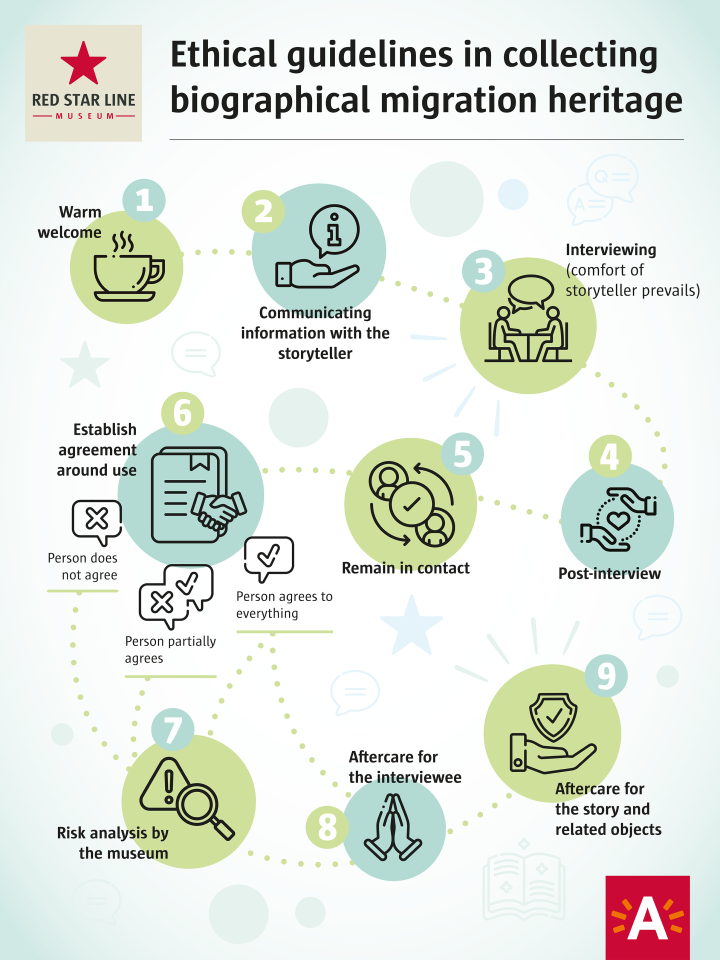
The Red Star Line Museum is committed to handling biographical migration heritage—and the people who entrust their stories or objects to us—in a caring and respectful manner. Sharing one’s personal migration history is often an emotional step. That is why, from the very first contact, we create a warm and safe environment where the donor feels seen and heard. We take the time to explain in clear language why we collect stories, how the process works, and what choices the donor can make along the way.
The interview or the transfer of objects always takes place at the storyteller's pace. The donor's well-being is our primary concern. Every interview is followed by a debriefing to check how the conversation went and whether there is a need for additional support, especially when painful or traumatic memories have surfaced. If desired, family members or professional caregivers may be present.
Our connection continues even after the conversation. The Red Star Line Museum consciously builds long-term relationships with its heritage communities: we keep donors informed about how their stories or materials are being used and ask for renewed consent when necessary. The donor decides for themselves which forms of preservation, accessibility, or use are permitted. These choices are carefully documented in an agreement with various options.
If we suspect that disclosing or using a story could cause harm to the donor or third parties, we conduct a risk analysis. This diligence is a core part of our ethical guidelines. It is not only the donor who deserves aftercare, but also the migration heritage itself: every story and every object is meticulously registered, sustainably preserved, and shared with the public in a responsible manner.
Furthermore, our entire methodology is clearly presented in an accessible infographic, which provides a step-by-step visualization of how we welcome, guide, preserve, and thoughtfully share stories.
In this way, we strive to make the museum a place of care—a place where migration stories are shared, preserved, and passed on with respect, attention, and humanity.